
Rafael de La-Hoz Arderius
Rafael de La-Hoz Arderius (Madrid, 1924–2000) played a pivotal role in the renewal of Spanish architecture during the second half of the twentieth century. His career encompassed architectural practice, research, teaching and public service, and was marked by a deep interest in technology, proportion and the social purpose of architecture.
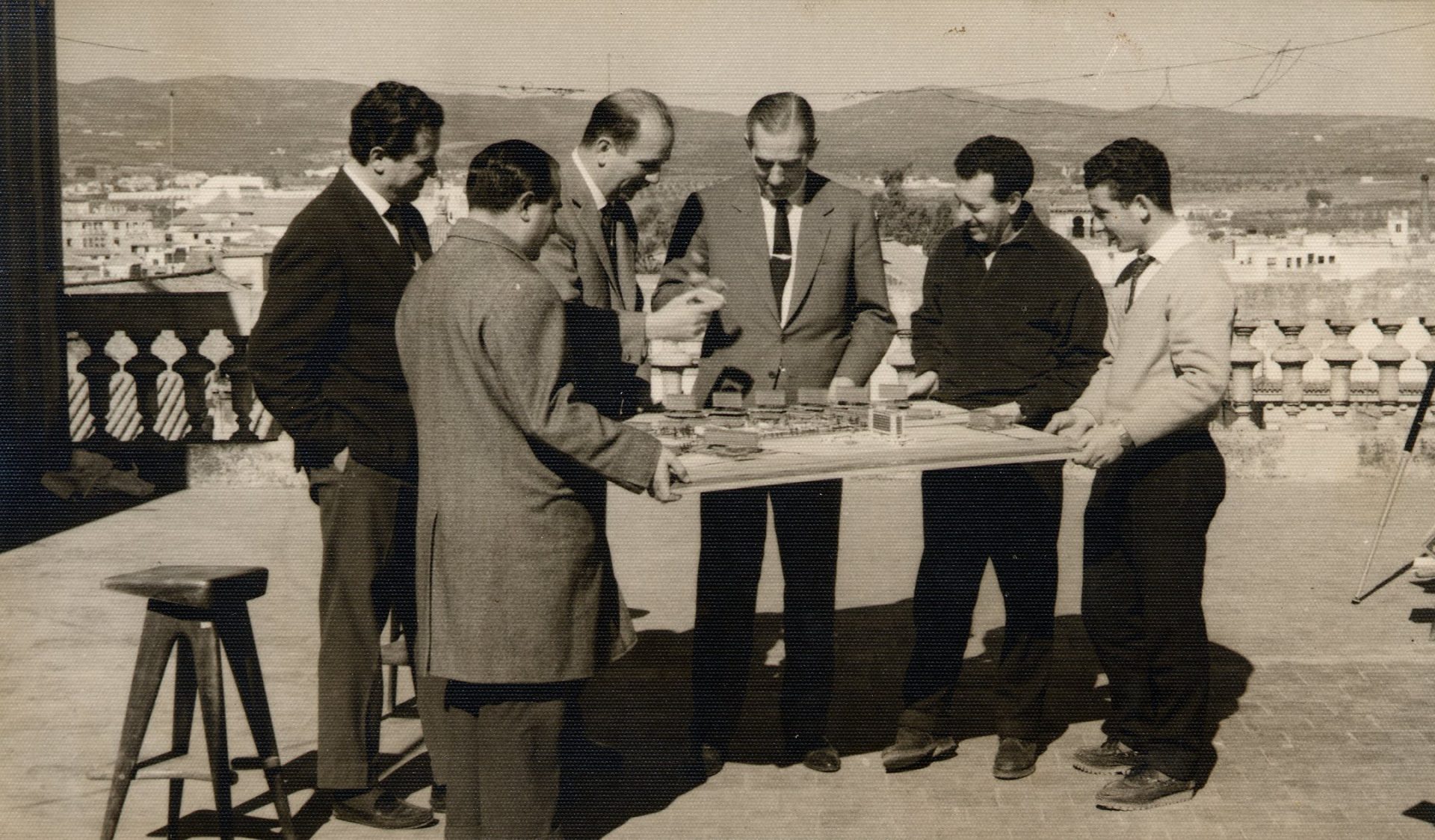
Biography

Born in Madrid on 9 October 1924, Rafael de La-Hoz Arderius spent his childhood and early professional years in Córdoba. He graduated from the Madrid School of Architecture in 1951 and pursued further studies at the Massachusetts Institute of Technology (MIT) in 1955. Córdoba became a laboratory for his early architectural research and a place where his ideas and designs evolved through dialogue with contemporary architects and artists.
His early work ranged from furniture and interior design to public buildings, housing and urban projects. The Córdoba Chamber of Commerce, designed in collaboration with José María García de Paredes and incorporating works by Jorge Oteiza and Miguel del Moral, exemplified his ambition to bring together technology, art and collective life. The Aquinas Hall of Residence, also designed in collaboration with García de Paredes, was awarded the 1956 National Architecture Prize.
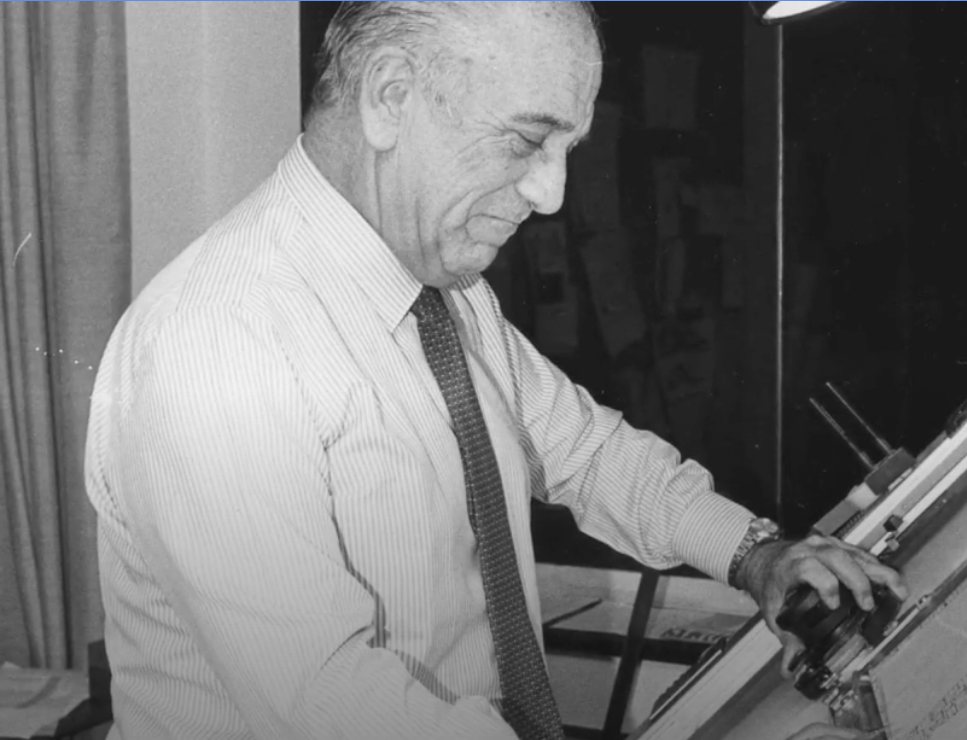
He sought testable solutions to practical problems without separating reason from sensibility. His research explored construction systems, living conditions and proportional relationships. Among his discoveries was the Cordovan Proportion, identified through the study of Córdoba’s architecture and subsequently explored as a cultural, scientific and aesthetic phenomenon found across the world.
Alongside his architectural practice, he played an active public role. At the Directorate-General for Architecture, he promoted the Technological Building Standards (NTE) in 1971 to standardise and improve construction processes. He served as President of the International Union of Architects from 1981 to 1985 and contributed significantly to professional discourse and representation.
In 1991, he was elected a full member of the Royal Academy of Fine Arts of San Fernando. Over the course of his career, he was awarded notable honours, including the Antonio Camuñas Prize for Architecture in 1995 and the Gold Medal for Architecture in 2000. He died in Madrid on 13 June 2000.
His legacy extends far beyond his buildings. It lives on in his writings, research, drawings and proposals; in his ability to unite humanism and technology; and in his conviction that architecture should serve society. The Foundation is dedicated to preserving this legacy while inviting new interpretations of his work and ideas.
Basic timeline
| Year | Milestone |
|---|---|
| 1924 | Born in Madrid on 9 October, grows up in Córdoba. |
| 1951 | Qualifies as an architect in Madrid. |
| 1955 | Furthers his studies at the Massachusetts Institute of Technology. |
| 1956 | The Aquinas Hall of Residence receives the National Architecture Prize. |
| 1950s and 1960s | Establishes a body of modern work in Córdoba that engages with technology, the arts and society. |
| 1971 | Champions the Technological Building Standards (NTE) at the Directorate-General for Architecture. |
| 1981–1985 | Serves as President of the International Union of Architects. |
| 1991 | Becomes a full member of the Royal Academy of Fine Arts of San Fernando. |
| 1995 | Receives the Antonio Camuñas Prize for Architecture. |
| 2000 | Receives the Gold Medal for Architecture and dies in Madrid on 13 June. |